Solar in Pittsburgh, minus the sales pitch.
Plain-English guides on cost, Pennsylvania incentives, net metering, and what cloudy skies really mean for your roof — written before you ever talk to an installer.
- Typical price
- $2.60–2.75/W
- Typical size
- 6–8 kW
- Before programs
- $16k–22k
- Pittsburgh
- Allegheny
- Butler
- Washington
- Westmoreland
- Beaver
The path every Pittsburgh homeowner should walk.
Answer these three before you request a single quote. Each guide takes under ten minutes.
- 14 min
Does solar even work here?
Clouds, snow, and roof orientation — what actually moves output in Western PA.
Read the climate guide → - 27 min
What will it cost me?
Real $/watt ranges, what drives a quote up, and how to compare proposals.
Read the cost guide → - 35 min
How does my bill change?
Net metering, true-ups, and the fixed charges that never go away.
Read the net metering guide →
What a Pittsburgh solar quote looks like in 2026.
Read the full breakdown →- Price per watt
- $2.60–2.75The range most Greater Pittsburgh quotes land in.
- System size
- 6–8 kWTypical for a single-family home in the metro.
- Total, before programs
- $16–22kEquipment and roof complexity move it up or down.
- Federal 25D credit
- $0No longer applies to owner-purchased systems in 2026.
Fresh off the desk.
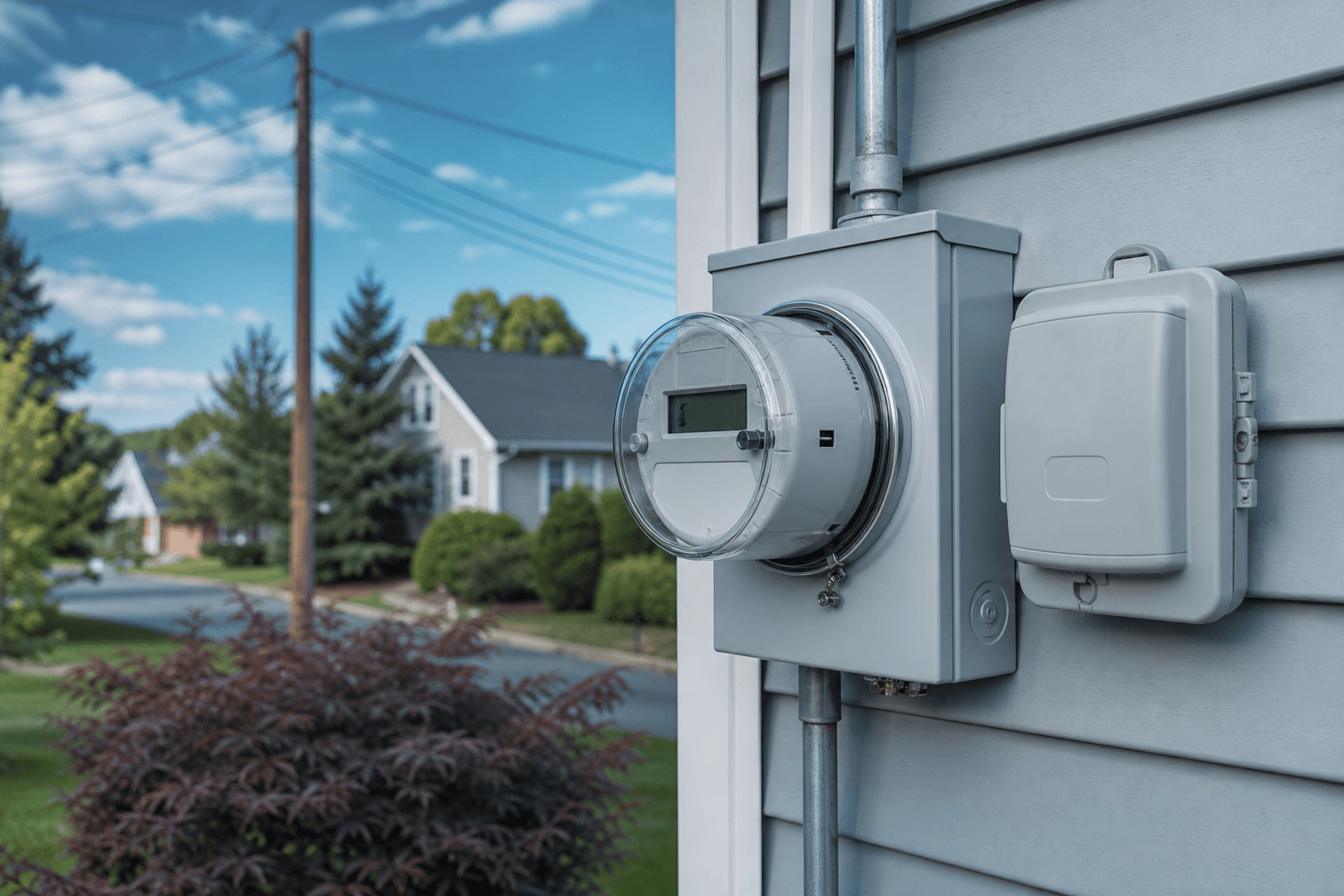
Net Metering in Pennsylvania Explained
How Pennsylvania net metering credits your solar exports: utility rules, billing impacts, and what to ask before interconnecting a rooftop system in Western PA.
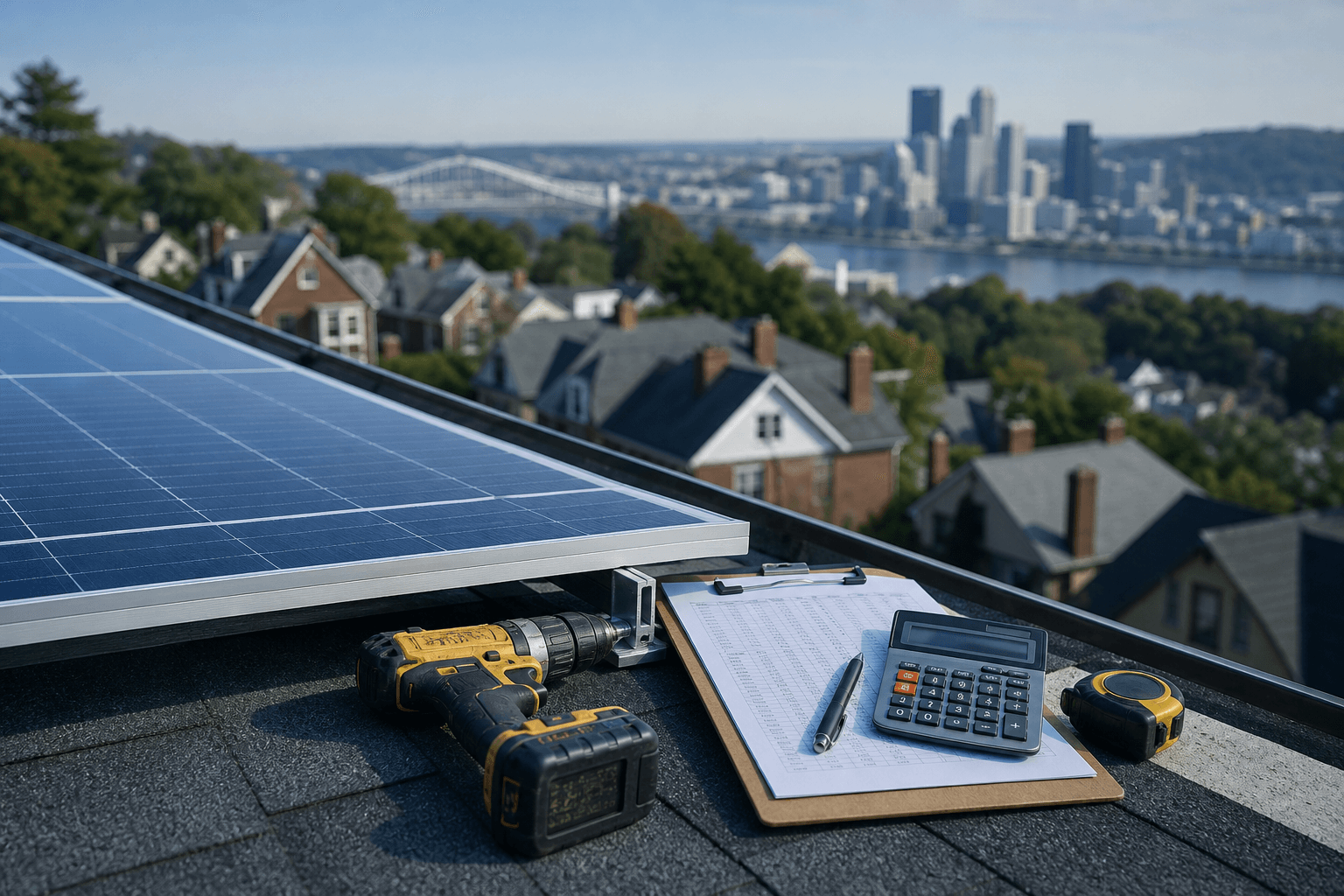
Solar Panel Cost in Pittsburgh PA (2026 Guide)
How much do solar panels cost in Pittsburgh and PA in 2026? Typical $/watt ranges, 6–10 kW system totals, what drives quotes, and how to compare proposals without a federal residential ITC.
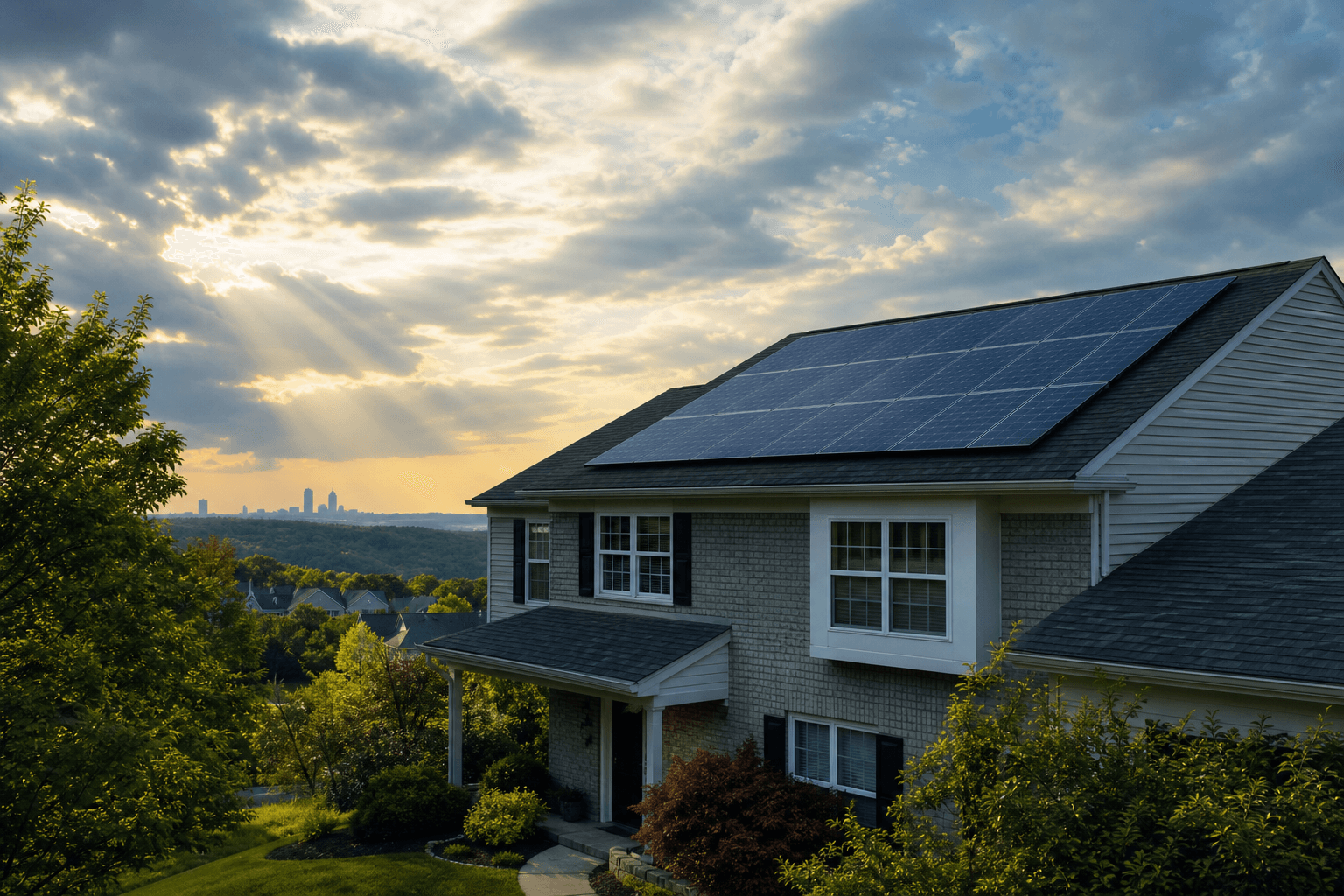
Does Solar Work in Pittsburgh?
Solar works in Greater Pittsburgh despite cloud cover. See how weather, snow, and roof orientation affect rooftop panel output in Western Pennsylvania.
What people ask us first.
Yes. Western Pennsylvania gets enough annual sunlight for productive rooftop systems. Panels still generate on overcast days, and summer production often offsets winter dips. See our guide on the cloudy-climate myth for the full picture.
Most Greater Pittsburgh homeowners see quotes in the $2.60 to $2.75 per watt range for a typical 6 to 8 kW system, often totaling roughly $16,000 to $22,000 before any programs. Equipment, roof complexity, and installer pricing move that figure up or down. See our Pittsburgh cost guide for how to compare proposals.
As of 2026, the federal residential tax credit (Section 25D) no longer applies to owner-purchased systems. Pennsylvania homeowners may still benefit from net metering, SREC income, and occasional utility or local programs. See our PA solar incentives 2026 guide for what still applies in Greater Pittsburgh.
When your panels produce more electricity than you use, the surplus is credited on your utility bill under Pennsylvania's net metering rules. Credits and rollover policies vary by utility — Duquesne Light and the FirstEnergy companies each have their own tariff. Our net metering guide explains the basics.
We write for homeowners across the Greater Pittsburgh metro and Western Pennsylvania, including Allegheny County and surrounding counties such as Butler, Washington, Westmoreland, and Beaver. Utility rules and incentives are Pennsylvania-wide; production and costs vary by address.
Stuck on something? Ask us.
Send your zip code and your question. We'll point you to the right guide. No sales calls — and no installer referrals unless you ask.